Hi everyone! Just want to give a very humble thank you for sharing the Divine Moments fan page on facebook. I promised once we reached 100 likes I would do a giveaway. Life has been insane this month so I am finally getting around to it. Divine Moments very first giveaway!
Well, my last post was a guest post on fundraising and I asked for those doing adoption fundraisers to link up. One of the first families to link up was the Hopkins family who are selling these beautiful "Pray it Forward" necklaces. How perfect to support an adopting family for this giveaway.
The necklace has been ordered and hopefully I will be getting it in the mail soon. I didn't want to delay starting the giveaway. There are several ways to enter - so see below.
Pray it Forward Necklaces
Description from Hopkin families Fundraising Page
Wear
this necklace and remain in prayer until it falls off. Then, let it go
to God with faith it has been answered. When someone asks about it,
share your prayer and increase awareness for local adoptions!
No
two necklaces are the same... they are ALL beautiful thanks to my
wonderfully brilliant friend Michele Oakland! Below are the examples
of the size. The size does not indicate the length of the necklace, but
rather the size of the pendant. Choices are small, medium and large.
*pictured above is an example not the one that will be given away*
To enter - sign into the Rafflecopter below and then you can earn entries by doing 3 easy things:
• If your a fan of Divine Moments on facebook - instant entry right there
• If you leave a blog post comment on this entry about what you would like to see on the blog - you
get a few more chances to win
• If you share the link to this giveaway on facebook - you also get a chance to win.
a Rafflecopter giveaway
Take me to another page....
Wednesday, March 27, 2013
Friday, March 15, 2013
Feature Friday: Fundraising *GUEST POST* & Link Up
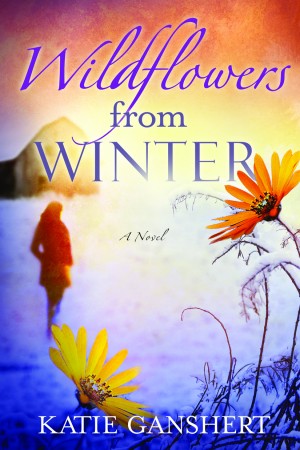
I am so excited to have author and adoption loving mom, Katie Ganshert, join us on the blog today. I instantly felt a bond with Katie when I found out she was from the Midwest. The bond grew when I found out she lived in the area where I was born, the corn filled state of Iowa. I have since became a Missourian but we are still linked by our Midwest roots. When our correspondence revealed that not only was she adopting from the Congo, but she was also an author I was ecstatic. I am a bonafide book worm. So if you like to read, make sure to put "Wildflowers from Winter" and "Wishing on Willows" on your list. Katie was kind enough to share some tips on how to do a successful puzzle fundraiser.
Link-up! Link-up! For those of you fundraising right now... don't forget to link-up below.
A fine-point Sharpie
Willing hearts
The finished product is such an amazing testimony of all the people who came alongside of your family and helped you bring your child home!
It’s so much less awkward when people can make their checks out to a non-profit organization instead of yourself. Plus, people are much more inclined to give if the donation is tax-deductible.
Consider applying for a matching grant with Lifesong for Orphans or Hand in Hand before starting your puzzle fundraiser.
#2 - Post the fundraiser on your blog.
If you don’t already have a blog, create one especially for your adoption puzzle fundraiser. Write a post explaining how the fundraiser works with a picture of the puzzle and how donations will be accepted.
Then email everyone you know the link and invite them to join you on your adoption journey!
#3 - Utilize Facebook!
Seriously, Facebook is your best friend. The thing about fundraisers such as these is that people have the best of intentions, but often forget and don’t send anything in.
This is where Facebook comes in.
Every time somebody sponsors a puzzle piece, write their name on the back, take a picture, and post the picture to Facebook (make sure to tag the person), publicly thanking the donor for being a part of your child’s adoption puzzle. Then include a link to your blog post.
Every couple evenings or so, take a picture of the puzzle as it comes together. Post the picture to Facebook, let everyone know how many pieces have been sponsored, and how many more are left. T hank everyone who’s already participated. Then end with an enthusiastic invitation to become a part of the puzzle and ask people to share on their on Facebook pages. Don’t forget to link to your blog as well.
I’ve had so many people tell me, as I post pictures of our adoption puzzle progress, how much they love seeing the puzzle come together. How it feels like a joint effort. How everyone who donates has a vested interest in getting this child home. People want to be a part of the journey. This fundraiser is a great way to make that happen!
About the author:
Katie Ganshert was born and raised in the Midwest, where she writes stories about finding faith and falling in love. When she’s not busy plotting her next novel, she enjoys watching movies with her husband, playing make-believe with her wild-child of a son, and chatting with her girlfriends over bagels. She and her husband are in the process of adopting from the Congo. You can find her online at her blog and on Facebook.
Link-up! Link-up! For those of you fundraising right now... don't forget to link-up below.
How to Do a Successful Puzzle Piece Fundraiser
by Katie GanshertWhat is it?
A very easy, amazing, enjoyable way to raise funds for your adoption!Supplies Needed:
A puzzle of something you’d like to hand in your child’s roomA fine-point Sharpie
Willing hearts
How does it work?
You decide on the number of pieces your puzzle will be, as well as how much each piece will cost to sponsor. Then you invite friends and family, co-workers and acquaintances to sponsor a piece (or multiple pieces) of the puzzle. You write names of each sponsor on the back of the puzzle pieces. When the puzzle is complete, you frame it in a double-sided glass frame, and hang it in your child’s room.The finished product is such an amazing testimony of all the people who came alongside of your family and helped you bring your child home!
3 Tips for Success:
#1 - Partner with a non-profit organization.It’s so much less awkward when people can make their checks out to a non-profit organization instead of yourself. Plus, people are much more inclined to give if the donation is tax-deductible.
Consider applying for a matching grant with Lifesong for Orphans or Hand in Hand before starting your puzzle fundraiser.
#2 - Post the fundraiser on your blog.
If you don’t already have a blog, create one especially for your adoption puzzle fundraiser. Write a post explaining how the fundraiser works with a picture of the puzzle and how donations will be accepted.
Then email everyone you know the link and invite them to join you on your adoption journey!
#3 - Utilize Facebook!
Seriously, Facebook is your best friend. The thing about fundraisers such as these is that people have the best of intentions, but often forget and don’t send anything in.
This is where Facebook comes in.
Every time somebody sponsors a puzzle piece, write their name on the back, take a picture, and post the picture to Facebook (make sure to tag the person), publicly thanking the donor for being a part of your child’s adoption puzzle. Then include a link to your blog post.
Every couple evenings or so, take a picture of the puzzle as it comes together. Post the picture to Facebook, let everyone know how many pieces have been sponsored, and how many more are left. T hank everyone who’s already participated. Then end with an enthusiastic invitation to become a part of the puzzle and ask people to share on their on Facebook pages. Don’t forget to link to your blog as well.
I’ve had so many people tell me, as I post pictures of our adoption puzzle progress, how much they love seeing the puzzle come together. How it feels like a joint effort. How everyone who donates has a vested interest in getting this child home. People want to be a part of the journey. This fundraiser is a great way to make that happen!
About the author:
Katie Ganshert was born and raised in the Midwest, where she writes stories about finding faith and falling in love. When she’s not busy plotting her next novel, she enjoys watching movies with her husband, playing make-believe with her wild-child of a son, and chatting with her girlfriends over bagels. She and her husband are in the process of adopting from the Congo. You can find her online at her blog and on Facebook.
Labels:
Friday Feature,
Fundraising
Friday, March 8, 2013
Guest Post: "Culture Shock" by Trésor Yenyi
Would like to give a warm welcome once again to my friend Trésor, founder of Mwangaza International.
He has graciously agreed to guest post every once in awhile here on Divine Moments. I enjoyed his last guest post as he shared about the different holidays of the DRC. Born in the Congo he has unique insights into the Congolese culture. For this post I asked him to share his thoughts on some of the differences between the cultures of the US and the DRC.
Cultures are beautiful. They are the flowers of many colors that God planted to make creation diverse yet equally valuable.
“Culture shock”, a term I learned in Bible College, would easily define my life. I was born to parents who are from different tribes in the DRC and I have lived in the four corners of the Congo. More recently I have spent several years in America. These combined experiences have made me a “culture shock” or perhaps I should say they have made me a bridge.
When I arrived in the US the first thing I noticed was that everything revolved around the individual whereas I grew up knowing that my community was the most important thing. It takes a personal effort to be successful in the US. It takes a village to raise a child and make a marriage work in the Congo. One of the first discussions I ever had with someone in this country was about these stark differences. I remember a friend of mine telling me that he did not want anyone involved in his decisions and that he would decide what was best for himself. Whereas, I consider my entire family when I make decisions.

Another “culture shock” was the ebb and flow of time. Time guides relationships in America; relationships guide time in the Congo. A 10 am appointment in the DRC will eventually happen between 11 and noon. This translates directly into every day conversation as well. Time in the Congo is allowed to slow when you ask someone, “How are you doing?” I remember being very frustrated when someone would walk toward me and ask “How is it going, Tresor?” and continue on their way. The Congo is void of such empty filler in conversations. The expectation to such a question asked would result in that person sitting and listening to the answer. A conversation would engage over the well being of the person and his/her family, with no frantic ticking of the clock in mind.
Family structures are also different. Distant relatives play a role in your life. They are your blood. People whose tribes are related to yours are your brothers. I always giggle trying to explain this concept to my American friends. I can tell that it is a concept that is hard to grasp.
It is also a world where your words carry more weight than you think. Written contracts are on paper, the modern administrations enforce them, but the reality is what you say is what counts.
After writing all this I feel like I haven’t told you anything new. You could easily read all this in textbooks and travel guides. There is a big difference between learning about a culture and experiencing a culture. The fact is you cannot learn a culture by simply reading a book. Unless you put on a learning hat and spend time with the culture; each word will be powerless.
Cultures are beautiful, different tastes but equally important. I believe after these years that there isn’t a culture that is better than the other. We experience God’s creative powers by encountering the differences with the courage to learn what would make us a better person.
I encourage you to experience the beauty.
ABOUT THE AUTHOR:
Trésor Yenyi was born in Eastern Congo in 1983 at the peak of Mobutu’s reign. Not realizing he was witnessing history in the making, he was helpless as he observed the country slide first into chaos, then into its grave—the victim of looting, war, and corruption. It was only after he immigrated to the United States that he realized the depth of the destruction that had occurred and began nurturing a strong desire to return to his native country to search for a cure for the disease from which Congo suffers. In his compelling travel narrative, Yenyi details his return trips to Congo, his subsequent charitable work, and the heartbreaking stories of the country’s victims of war. While providing the voiceless a chance to speak through him, Yenyi reveals the humanitarian challenges of Congo and combines his life experiences with journal entries—creating an introspective glimpse into a world where child soldiers, rape victims, street children, and AIDS orphans are the realities of life. Trésor Yenyi has a dream—that the troubled land of his ancestors will find peace once again. It is with this great hope for the future of his homeland that Yenyi remembers Congo’s forgotten.
To purchase Journey to the Heart of Darkness click here -----------> Buy Book!
He has graciously agreed to guest post every once in awhile here on Divine Moments. I enjoyed his last guest post as he shared about the different holidays of the DRC. Born in the Congo he has unique insights into the Congolese culture. For this post I asked him to share his thoughts on some of the differences between the cultures of the US and the DRC.
Cultures are beautiful. They are the flowers of many colors that God planted to make creation diverse yet equally valuable.
“Culture shock”, a term I learned in Bible College, would easily define my life. I was born to parents who are from different tribes in the DRC and I have lived in the four corners of the Congo. More recently I have spent several years in America. These combined experiences have made me a “culture shock” or perhaps I should say they have made me a bridge.
When I arrived in the US the first thing I noticed was that everything revolved around the individual whereas I grew up knowing that my community was the most important thing. It takes a personal effort to be successful in the US. It takes a village to raise a child and make a marriage work in the Congo. One of the first discussions I ever had with someone in this country was about these stark differences. I remember a friend of mine telling me that he did not want anyone involved in his decisions and that he would decide what was best for himself. Whereas, I consider my entire family when I make decisions.

Another “culture shock” was the ebb and flow of time. Time guides relationships in America; relationships guide time in the Congo. A 10 am appointment in the DRC will eventually happen between 11 and noon. This translates directly into every day conversation as well. Time in the Congo is allowed to slow when you ask someone, “How are you doing?” I remember being very frustrated when someone would walk toward me and ask “How is it going, Tresor?” and continue on their way. The Congo is void of such empty filler in conversations. The expectation to such a question asked would result in that person sitting and listening to the answer. A conversation would engage over the well being of the person and his/her family, with no frantic ticking of the clock in mind.
Family structures are also different. Distant relatives play a role in your life. They are your blood. People whose tribes are related to yours are your brothers. I always giggle trying to explain this concept to my American friends. I can tell that it is a concept that is hard to grasp.
It is also a world where your words carry more weight than you think. Written contracts are on paper, the modern administrations enforce them, but the reality is what you say is what counts.
After writing all this I feel like I haven’t told you anything new. You could easily read all this in textbooks and travel guides. There is a big difference between learning about a culture and experiencing a culture. The fact is you cannot learn a culture by simply reading a book. Unless you put on a learning hat and spend time with the culture; each word will be powerless.
Cultures are beautiful, different tastes but equally important. I believe after these years that there isn’t a culture that is better than the other. We experience God’s creative powers by encountering the differences with the courage to learn what would make us a better person.
I encourage you to experience the beauty.
To give you a glimpse into a bit of the beauty of the DRC I am going to share the slideshow again that I made up of various pictures from those who have traveled there that I shared on the Divine Moments fan page. If you have not "liked" us on facebook you should. When the fan page reaches 100 likes I will be doing a giveaway.
ABOUT THE AUTHOR:
Trésor Yenyi was born in Eastern Congo in 1983 at the peak of Mobutu’s reign. Not realizing he was witnessing history in the making, he was helpless as he observed the country slide first into chaos, then into its grave—the victim of looting, war, and corruption. It was only after he immigrated to the United States that he realized the depth of the destruction that had occurred and began nurturing a strong desire to return to his native country to search for a cure for the disease from which Congo suffers. In his compelling travel narrative, Yenyi details his return trips to Congo, his subsequent charitable work, and the heartbreaking stories of the country’s victims of war. While providing the voiceless a chance to speak through him, Yenyi reveals the humanitarian challenges of Congo and combines his life experiences with journal entries—creating an introspective glimpse into a world where child soldiers, rape victims, street children, and AIDS orphans are the realities of life. Trésor Yenyi has a dream—that the troubled land of his ancestors will find peace once again. It is with this great hope for the future of his homeland that Yenyi remembers Congo’s forgotten.
To purchase Journey to the Heart of Darkness click here -----------> Buy Book!
Labels:
Congolese Culture,
Guest Post
Tuesday, March 5, 2013
Congolese Cooking & One Year Celebration
I have no idea where time is going. It keeps slipping by. My poor blog is neglected. I hang my head in shame that I didn't even share about our one year home celebration or my first attempt at trying to cook Congolese food.
First was the preparation, finding ingredients in po-dink-ville. Po-dink-ville is defined is living 1 hour from the nearest Starbucks. (yes, please feel sorry for me) A google search revealed a grocery store that carried a wide selection of foods that I might be interested in, an hour away of course. So I made plans with a friend to visit the store. We browsed through many items with labels we could not read and finally reached the African section.
I purchased some FuFu mix, frozen Cassava leaves, Palm oil, red sauce/stew very similar to Pili Pili I think because it was SPICY!
Then I attempted to make some Pondu. Keep in mind if you look up what cassava is wikipedia will show you the picture to the left and define cassava as:
First I added a bit of water and began to unthaw and cook my frozen cassava leaves. You have to cook them for quite awhile. I watched a video of a guy cooking the leaves so kind of based it off that. Not sure what the difference is between Plassas and Pondu. I have a lot to learn. Here is the video: Sierra Leone Recipe: Cassave Leaf Plassas We added shallots to the cassava because I forgot to pick up some fish. It was what we had in the freezer and was actually quite good, but probably not authentic. I would say adding a cooked sardine would more closely resemble the original dish.
First, the clapping beat: The beat is 1,2,3, pause, 1,2,3, pause, 1!
Second, the action: As the players clap the last, single beat, they jump into the air. Then in a quick motion, as they are about to land, they make their choice.
The choices are:
1. Right foot out in front
2. Left foot out in front
3. Feet split apart side-by-side
If you want, you can make up your own way of scoring these three outcomes. Or you can use “Rock, Scissors, Paper” to help you score. When the right foot is forward you can call that “ROCK,” as it begins with “R.” You can call the split “SCISSORS,” since it begins with “S.” When the left foot is forward, you can call it “PAPER,” the only choice left. (You know how those go, don’t you? The kids will know!)
The players should be looking at each other’s faces and not at their feet. The game can be played with any number of participants or in small groups.
And remember: If you think you’re not doing the game right, don’t worry about it. It’s a game! You can even let the kids make their own rules. If they’re having fun with it, that’s all that counts.
from Paul Carlson.org
First was the preparation, finding ingredients in po-dink-ville. Po-dink-ville is defined is living 1 hour from the nearest Starbucks. (yes, please feel sorry for me) A google search revealed a grocery store that carried a wide selection of foods that I might be interested in, an hour away of course. So I made plans with a friend to visit the store. We browsed through many items with labels we could not read and finally reached the African section.
I purchased some FuFu mix, frozen Cassava leaves, Palm oil, red sauce/stew very similar to Pili Pili I think because it was SPICY!
Then I attempted to make some Pondu. Keep in mind if you look up what cassava is wikipedia will show you the picture to the left and define cassava as:a woody shrub of the Euphorbiaceae (spurge family) native to South America, is extensively cultivated as an annual crop in tropical and subtropical regions for its edible starchy, tuberous root, a major source of carbohydrates.
Got all that? Now here is the funny part (if you share my warped sense of humor).....
Like other roots and tubers, Cassava contains anti-nutrition factors and toxins.[5] It must be properly prepared before consumption. Improper preparation of cassava can leave enough residual cyanide to cause acute cyanide intoxication and goiters, and may even cause ataxia or partial paralysisSo as you can see, Congolese cooking is a major endeavor on my part. If not cooked properly I could poison my family. I could paralyze people with my cooking?! Now this is a new level of cooking people! I pressed on, determined to bring Zalen a taste of Africa here in America.
First I added a bit of water and began to unthaw and cook my frozen cassava leaves. You have to cook them for quite awhile. I watched a video of a guy cooking the leaves so kind of based it off that. Not sure what the difference is between Plassas and Pondu. I have a lot to learn. Here is the video: Sierra Leone Recipe: Cassave Leaf Plassas We added shallots to the cassava because I forgot to pick up some fish. It was what we had in the freezer and was actually quite good, but probably not authentic. I would say adding a cooked sardine would more closely resemble the original dish.
While the cassava cooked I diced up some chicken and cooked it up with a few onions and garlic. Then I cooked up a tomato/peanut sauce for the chicken. I found the recipe here: Chicken in Peanut-Tomato Sauce.
In the Congo peanuts are often called ground nuts. The above picture is at Zalen's orphanage where they shared some of these ground nuts with us. Craig and I both tried a few. I actually wanted to use fresh peanuts for this recipe as I had some leftover from Christmas, but ran out of time and just used creamy peanut butter.
Instead of serving over rice, I made some Couscous that I found in the African food section of the store. According to the Congo Cookbook website: Couscous (Cous-cous or Cous cous) is a
traditional staple food in North Africa; it is also common in Western
Africa whence it has spread into Central Africa. Couscous is a pasta,
made by mixing flour and water to form a paste which is then formed and
dried. Most couscous is made with flour ground from durum wheat, but
rice, maize (corn), or cowpea (black-eyed pea) flours are sometimes
used. Home-made couscous is rare these days; even in rural Africa most
people buy ready-to-use couscous from a store or market.
The last two components to the dish were boiled yams that I salted and peppered and some fufu that I made from a mix. I am not a fan of fufu.
Here is a look at the dishes all together:
Below is Zalen eating his Congolese meal in the Congo.
The one thing I didn't get done was the fried plantains. I did make them later on that week.
For dessert we had some Africa shaped sugar cookies
After dinner we looked through photos of our time in Africa and played a couple of games. We had a race to see who could balance certain items on their heads and make back and forth across the leaving room. Craig did it the traditional way. One of my favorite memories is when we were packing up to leave for the airport and we gave Zalen something to carry so he could help. He put it on his head and walked down the hallway. :-)
I also taught the girls how to play Tobeta Maboko
Tobeta Maboko
This is a very popular African clapping game, often played at school or between household tasks. It is essentially played like the “Rock, Scissors, Paper” game, only it is done with the hands and feet to a clapping beat.First, the clapping beat: The beat is 1,2,3, pause, 1,2,3, pause, 1!
Second, the action: As the players clap the last, single beat, they jump into the air. Then in a quick motion, as they are about to land, they make their choice.
The choices are:
1. Right foot out in front
2. Left foot out in front
3. Feet split apart side-by-side
If you want, you can make up your own way of scoring these three outcomes. Or you can use “Rock, Scissors, Paper” to help you score. When the right foot is forward you can call that “ROCK,” as it begins with “R.” You can call the split “SCISSORS,” since it begins with “S.” When the left foot is forward, you can call it “PAPER,” the only choice left. (You know how those go, don’t you? The kids will know!)
The players should be looking at each other’s faces and not at their feet. The game can be played with any number of participants or in small groups.
And remember: If you think you’re not doing the game right, don’t worry about it. It’s a game! You can even let the kids make their own rules. If they’re having fun with it, that’s all that counts.
from Paul Carlson.org
Love my crew :-)
Labels:
Congolese Cooking,
Congolese Culture,
Milestone
Subscribe to:
Posts (Atom)